Classic 1920s Mens Suits - Timeless Fashion for Swell Fellas
The classic 1920s mens suit set the gold standard for mens fashion for the entire decade, and perhaps the century.
. . . whether men purchased their suits in the United States or had one custom made in a small tailor's shop in Rome (like the pinstriped gangster suits made famous by Al Capone) men's fashion in the 1920s was classic.
Men's fashion hasn't changed a whole lot between The Roaring Twenties and today.
Because the number of quality suit cutters and tailors has decreased making it difficult to find a designer suit at a decent price.
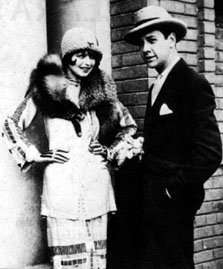 The "Classic" Look of a 1920s Suit
The style of a man's suit remains classic and timeless.
Like those of the 1920s.
The industrial developments, perfected after World War I, contributed to the death of the quality neighborhood tailor.
The ready-to-wear clothing movement due to the rise of the department store catalog were booming - bringing the popular styles of modern men's suits to the major cities to the rural areas of the country.
Thousands of young people were following "the American Dream" and moving into the city.
No longer was it the dream to own a few acres, raise a few kids, and live a little life of "quiet desperation" on a farm somewhere. . .
Fine 1920s Mens Suits and The Birth of
"The American Dream"
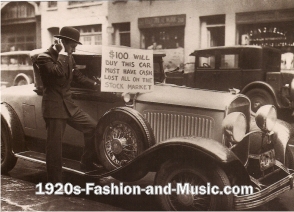 Stock Market Crash: A Man Dressed in a Suit Selling His Rolls Royce For $100 (1929)
The Roaring Twenties made it clear that it was a new age where anyone's dreams could come true if you had the guts to chase them.
You just had to look at Carnegie or Rockefeller for proof. . . the look of success had changed.
Wall Street was charging ahead, inventions were a dime a dozen, the "Silver Screen" and Broadway Shows were alive with beautiful talented stars.
This was the "golden age" of business, movies, music, and fashion. The 1920's were an exciting time to be alive. . .
Fashion became a booming business!
Even though Rockefeller's Standard oil had been broken up in 1911, and Andrew Carnegie died in 1919, huge corporations were thriving and there was a immediate need in the major American cities for talented advertising, accounting, and media people.
Business culture was born in cities all over the U.S.
New York, Chicago, San Francisco, and Los Angeles all saw huge spikes in their populations after the war. . .
Mens suits of the 1920s and business-wear came into vogue shortly thereafter.
As an added bonus of all this commerce, the mail order catalogs from Sears, Roebuck and Montgomery Ward exposed the country kids to mens fashion.
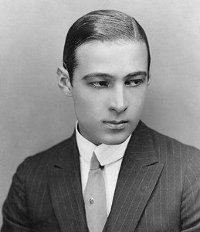 Rudolph Valentino - Dressed To the Nines (1925)
With the bright lights and excitement of city life - do you blame them for leaving the hard work of the farm behind?
Popular brands of today started in the 1920s or before. Men wore Jos. A. Bank suits back in the Roaring Twenties and the label is still around almost 100 years later.
Classic Style of 1920s Mens Suits
In the early part of the 1920s, the "conservative suit", as it's known today, was the most popular mens suit style.
Marked by it's tightly fitted jacket, high "pinched" waist and narrow shoulders, the conservative suit cut a thin silhouette - hardly the look of the American businessman as we've come to know him.
Fashion was soon to change. These high end 1920s mens suits are the ones you will often see well dressed men wearing in the pages of the latest men's fashion magazines, in the movies and on television.
In about 1924, the style of mens suits shifted away from the thin cut and pinched waist look of what was then known as the "Jazz suit". This jazz influenced style would morph into the zoot suit in the 1930s.
During the 1920s fine American suit makers like Brooks Brothers came into it's own as the leader in American mens fashion. Brooks Brothers and other fine men's clothing houses defined the look of the custom suit that has been in style for nearly 80 years. . .
These high end mens suits are the ones you will often see well dressed men wearing in the pages of the latest men's fashion magazines, in the movies and on television.
Fashion History for Men
With the birth of business culture, 1920s mens suit transformed men's fashion.
In the previous era, a suit came in three separate parts: the jacket, vest, and trousers. In recent years the vest has become an anomaly. But, up until the end of the Victorian era, men wore a sacque "suit" made from the same materials and of the same color only at informal occasions.
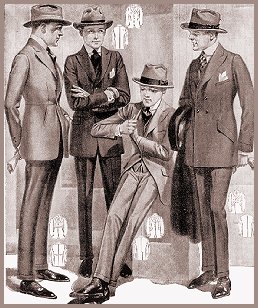 Men dressed "Jazz Suits" defined by their high, narrow waists
In the 1920s, formal menswear was a tuxedo with all the elements, the jacket (with tails), vest, and pants all made from different types of materials.
Follow the links on this page to get more perspective on the history of suits for men and how the classical styles of the past are still reflected in modern fashion.
Go to the top of this 1920s Mens Suits Page
Or read much more about the Beautiful Fashions of the 1920's